

印尼商标申请程序
March 9, 2026
印度尼西亚商标抢注问题及应对策略
June 11, 2026印尼商标申请程序
March 9, 2026印度尼西亚商标抢注问题及应对策略
June 11, 2026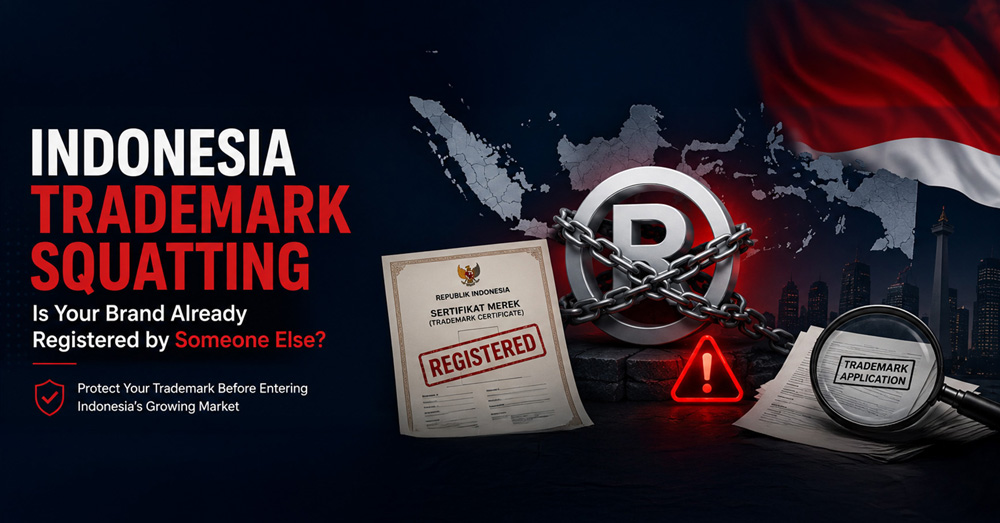
About Trademark Squatting in Indonesia
As an IP practitioner, in recent years we have noted an increasing number of cases involving foreign trademarks that have been registered in Indonesia by local parties without the knowledge or consent of the rightful trademark owners. A troubling aspect is that some squatters operate as “professional squatters,” having registered multiple foreign trademarks in Indonesia, making them particularly difficult to deal with. This has given rise to various legal and commercial challenges for rightful trademark owners when entering the Indonesian market.
The increasing prevalence of trademark squatting cases in Indonesia may be attributed to several factors, including the following:
Indonesia's first-to-file trademark system.
Under this system, trademark rights are generally granted to the party that first files the trademark application, irrespective of which party first created or used the trademark. This first-to-file principle may create opportunities for third parties to register trademarks that rightfully belong to others.
Large population and growing consumer market.
As of the date of this article, Indonesia is the 4th most populous country in the world (approximately 280 million people). This has made Indonesia a huge and attractive market in the world, particularly for fast-moving consumer goods (FMCG) such as food and beverages, skincare products, cosmetics, apparel, and household goods. Consequently, Indonesia continues to attract substantial investments from companies around the world to expand their commercial presence in the country. This in turn has incentivized trademark squatting activities by parties seeking to obtain financial benefits through the unauthorized registration of well-known or valuable trademarks.
To address these issues, the rightful trademark owner may pursue the following legal remedies and enforcement measures:
| Options | Description |
|---|---|
| Initiating trademark cancellation lawsuit based on bad-faith registration |
|
| Conducting negotiation |
|
| Initiating trademark cancellation lawsuit based on non-use (5 years) |
|
For foreign trademark owners, safeguarding trademark rights in Indonesia and Southeast Asia requires careful consideration of the following:
- Register your trademark before introducing your products or services into the Indonesian market, including prior to the appointment of local distributors or agents.
- Register your trademark in all relevant classes covering your products and services.
- Regularly monitor marketplaces, social media, and e-commerce platforms in Indonesia for potential infringements. Enforce your rights against any infringing activities promptly, and file oppositions against conflicting trademark applications during the publication period.
TAGS: NBS, Intellectual property, Trademark squatting, Indonesia trademark, Indonesia IP, PT NBS, Trademark cancellation, Trademark bad faith cancellation