
印度尼西亚商标抢注问题及应对策略
June 11, 2026
通过边境管控打击假冒商品:印度尼西亚商标执法的成本效益策略
June 19, 2026印度尼西亚商标抢注问题及应对策略
June 11, 2026通过边境管控打击假冒商品:印度尼西亚商标执法的成本效益策略
June 19, 2026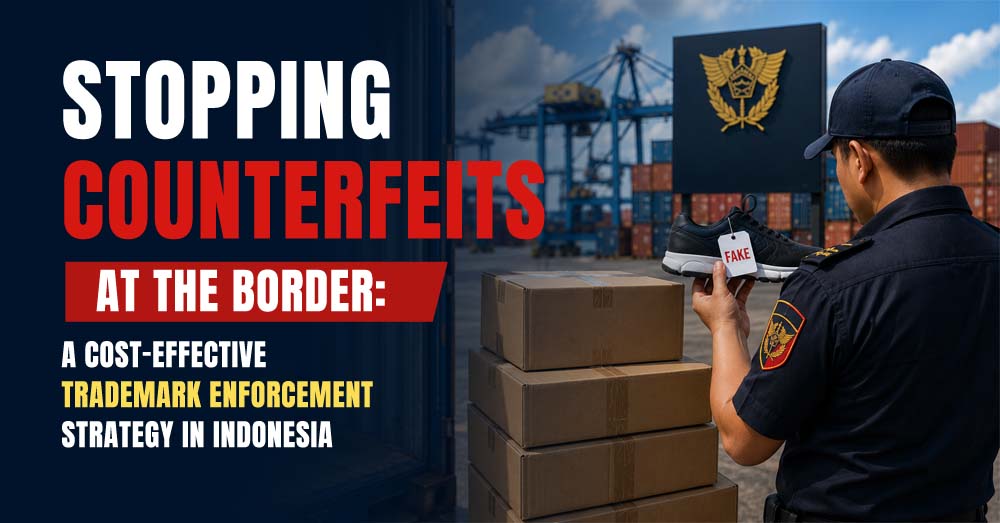
For many trademark owners, enforcement efforts often begin only after counterfeit products have already reached the market. Unfortunately, once infringing goods enter distribution channels, enforcement can become significantly more difficult and costly. Rights holders may need to conduct investigations, monitor multiple sales channels, issue cease-and-desist letters, pursue marketplace takedowns, coordinate with law enforcement authorities, or even initiate court proceedings.
An often-overlooked alternative is to prevent counterfeit products from entering the market in the first place through Customs recordation.
Indonesia provides a mechanism for intellectual property owners to record their registered trademarks with the Directorate General of Customs and Excise (DGCE) through the Customs-Excise Information System and Automation (CEISA). This system allows Customs authorities to identify and monitor potentially infringing goods at the border before they are distributed within Indonesia. The legal framework for Customs recordation is primarily governed by Law No. 17 of 2006 concerning Customs, Government Regulation No. 20 of 2017 on Control of Import or Export of Goods Suspected of Infringing Intellectual Property Rights, and Minister of Finance Regulation No. 40/PMK.04/2018 concerning the Recordation and Suspension Mechanism by Customs Authorities Against Imported or Exported Goods Suspected of Infringing Intellectual Property Rights.
From a practical perspective, Customs recordation can be one of the most cost-effective trademark enforcement tools available to brand owners. Stopping a single shipment at the border is often considerably less expensive than pursuing counterfeit products that have already spread through wholesalers, retailers, traditional markets, and online platforms. Early intervention may significantly reduce investigation costs, enforcement expenses, and potential reputational damage.
To apply for Customs recordation, trademark owners must hold a valid Indonesian trademark registration and submit an application through the CEISA system. Under Minister of Finance Regulation No. 40/PMK.04/2018, only Indonesian-established business entities may apply for Customs recordation.
Key Requirements for Trademark Recordation
Under Minister of Finance Regulation No. 40/PMK.04/2018, applications for trademark recordation with the Directorate General of Customs and Excise (DGCE) must be submitted by a business entity established in Indonesia. In the case of a foreign trademark owner, the application must be filed through an Indonesian legal entity that has common directors and/or shareholders with the foreign entity. The required documents and information are set out below:
Corporate Documents
- Deed of establishment and latest amendment(s);
- Taxpayer Identification Number (NPWP);
- Business license and/or company registration documents;
- Domicile certificate (if applicable).
Trademark-Related Documents
- Trademark registration certificate issued by the Directorate General of Intellectual Property (DGIP);
- Information regarding the authenticity of genuine products, including product characteristics, trade names, packaging, product appearance, distribution routes, marketing channels, and market coverage;
- Declaration from the trademark owner confirming ownership of the trademark and accepting responsibility for the recordation;
- Evidence of assignment, where ownership of the trademark has been transferred;
- Information regarding authorized importers and exporters of goods bearing the recorded trademark; and
- Any additional information required by Customs authorities to facilitate the identification of potentially infringing goods.
From a practical perspective, rights holders should provide as much information as possible regarding the distinguishing characteristics of genuine products. Comprehensive product information enables Customs officers to more effectively identify and intercept suspected counterfeit goods at the border.
Beyond immediate enforcement benefits, Customs recordation also serves as a deterrent. Counterfeiters generally seek markets where enforcement risks are low. When a trademark is actively recorded with Customs and supported by comprehensive product information, the likelihood of detection increases, making the brand a less attractive target for infringers.
As intellectual property advisors, we frequently remind clients that trademark registration alone does not automatically prevent infringement. Registration establishes legal rights, but proactive enforcement measures are necessary to maximize the value of those rights. Customs recordation should therefore be viewed as an important component of a broader brand protection strategy alongside trademark registrations, online enforcement programs, investigations, and marketplace monitoring.
In today's increasingly globalized supply chains, effective trademark protection is not solely about responding to infringement, it should be about preventing counterfeit products from entering the market altogether. For many businesses, Customs recordation through CEISA offers a practical, efficient, and cost-effective way to achieve that objective.